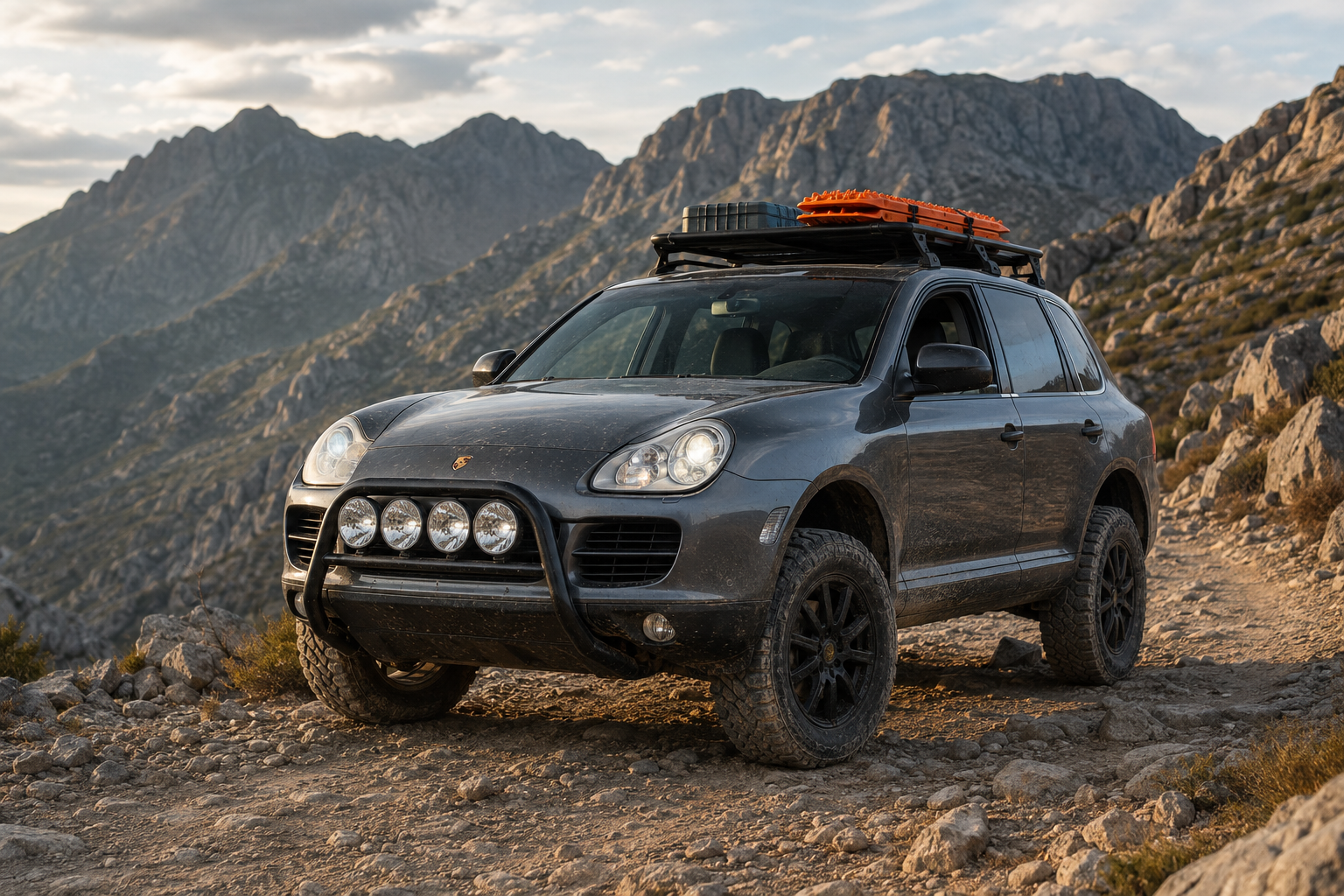
Steel Spring Lift Guide: Cayenne 955/957, Touareg 7L & Audi Q7 4L
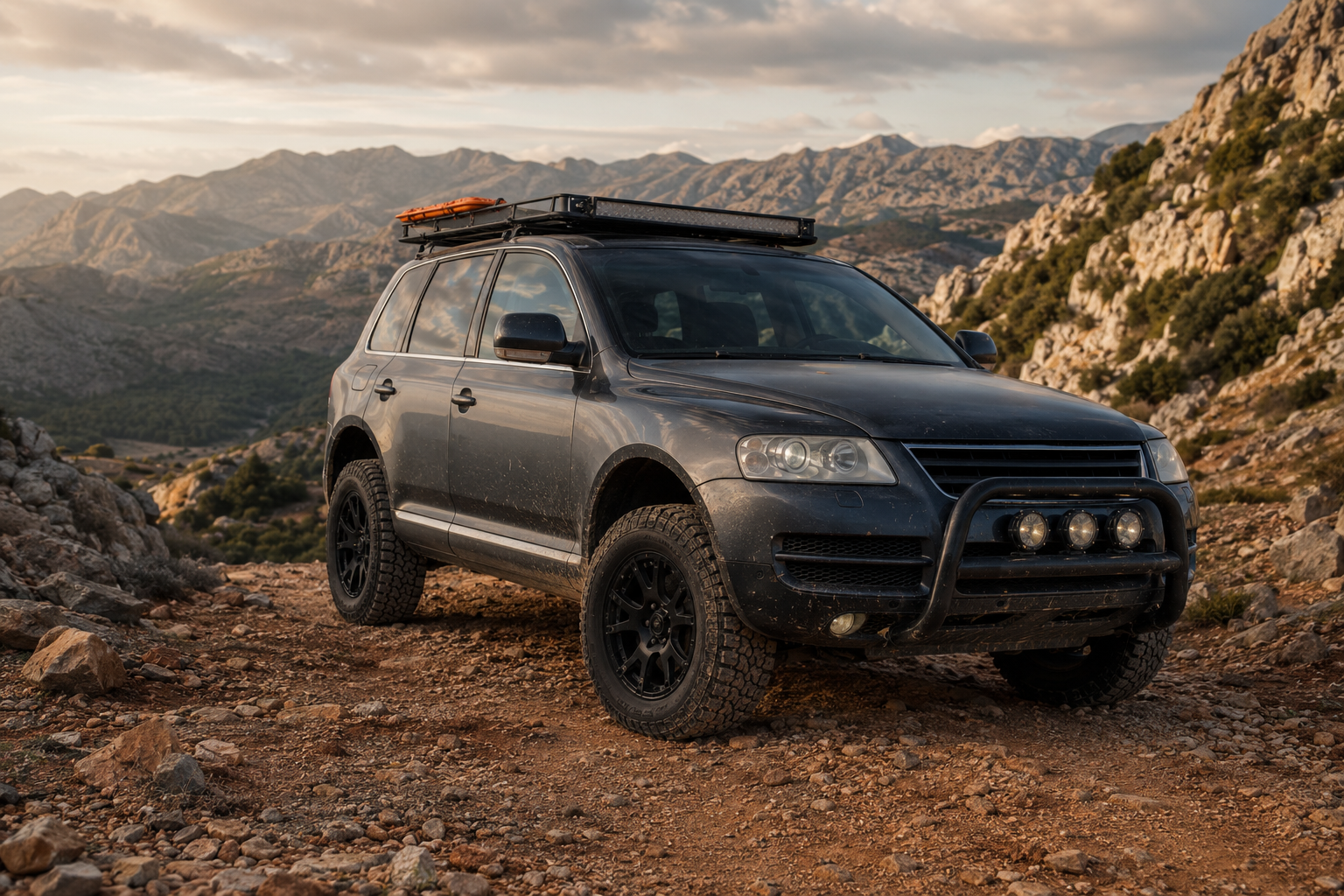
Volkswagen Touareg 7L prepared for overland travel.
Mechanical simplicity still requires careful matching
A steel-spring lift can be a robust solution for a Cayenne 955/957, Touareg 7L or Audi Q7 4L. Unlike an air-suspension setup, ride height is determined mechanically by the springs, spacers and vehicle load. The spring, damper and available wheel travel must therefore be considered together.
How a steel-spring lift works
A lift may use spring spacers, complete replacement springs, revised dampers or a matched combination. A spacer changes static ride height but does not automatically add damper travel. A longer or differently valved damper can alter available droop and control, but it must remain compatible with the spring and suspension geometry.
Quoted lift height is normally an approximate design target. Actual height can vary with engine weight, equipment, spring age and permanent payload. Measure the vehicle before and after installation at fixed reference points.
Spring rate, preload and vehicle weight
A spring must support the real operating weight of the vehicle. A light daily driver and a touring vehicle carrying a roof rack, protection, tools and camping equipment place very different demands on the suspension. Springs that are too soft may sag when loaded; springs that are unnecessarily stiff can reduce comfort and usable articulation.
Spacer height and additional spring preload are not the same as extra suspension travel. Excessive preload can reduce droop and make the wheel unload earlier on uneven ground. The target is controlled movement in both directions, not simply the tallest parked stance.
Damper length and travel
At full compression, the bump stop—not the damper—should protect the suspension from bottoming out. At full droop, the damper should not allow brake hoses, ABS wiring or CV joints to become the limiting component. Check these points with the spring safely unloaded and the suspension moved through its travel.
Geometry and alignment
Like an air-suspension lift, a steel-spring lift changes control-arm and driveshaft angles. Camber, caster and toe must be measured after installation. Some combinations remain within the original adjustment range; others may require geometry-correction parts. Alignment results should lead the decision.
Before ordering a kit
Confirm the vehicle was factory-built with steel springs or properly converted.
Check model year, engine, axle weights and existing suspension option.
Calculate permanent accessories and expected travel payload.
Confirm whether the kit includes matched dampers or only spacers.
Verify the manufacturer’s tyre and alignment recommendations.
Do not mix air and steel-spring instructions
Sensor-link procedures and air-system calibration belong to air suspension. Spring seating, preload and matched damper travel belong to steel-spring suspension. A vehicle converted from air to steel requires its own verified parts list and electronic strategy; it should not be treated automatically as a factory steel-spring model.
Installation and post-installation checks
Inspect spring seats, isolators, top mounts and dampers.
Tighten bonded-rubber bushes at the specified ride position.
Check hose, wiring, tyre and driveshaft clearance at full travel.
Perform a professional four-wheel alignment.
Recheck ride height and critical fasteners after settling.
Fitment note: Platform relationship does not guarantee identical springs, dampers or spacers. Cayenne 955/957, Touareg 7L and Audi Q7 4L components must be confirmed for the exact vehicle and axle load.
Safety: Follow the current manufacturer instructions and torque values. Confirm local inspection, approval and insurance requirements before modifying ride height, track width or tyre size.
Air Suspension Lift Guide: Cayenne 955/957, Touareg 7L & Audi Q7 4L
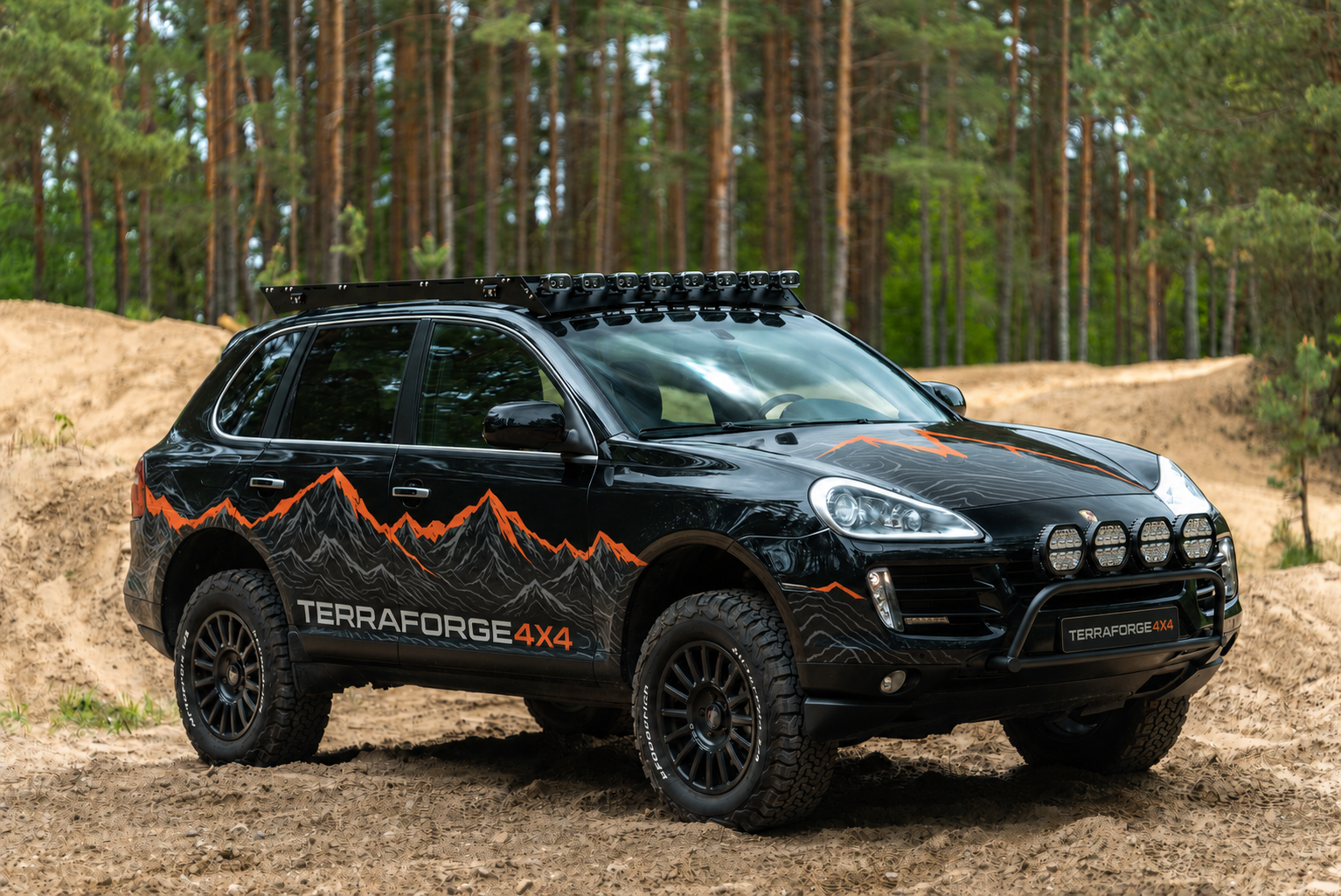
MBD4x4 Cayenne 957 development vehicle — image used with permission.
A lift must work with the air system—not against it
The factory air suspension is one of the strongest features of the Cayenne 955/957, Touareg 7L and Audi Q7 4L. A well-designed lift retains height adjustment and ride comfort while creating a higher mechanical baseline. It also introduces checks that do not apply to steel-spring vehicles.
How an air-suspension lift works
Depending on the kit, the vehicle may use strut spacers, revised level-sensor links, subframe components or a combination of these. Sensor links influence what the control system reads; mechanical spacers change the physical position of the body or strut. These are different functions and must match the complete kit design.
The dashboard height selection may remain available, but every factory setting now needs to be checked physically. The highest selectable mode is especially important because hoses, wiring, joints and dampers are closest to their limits there.
Pre-installation inspection
Scan the suspension control system and resolve existing faults first.
Check air springs, struts, compressor performance and valve block operation.
Inspect level sensors and their links for play or damage.
Inspect control arms, ball joints, wheel bearings and CV boots.
Record the original ride height at all four corners on level ground.
Geometry and driveline angles
Raising the vehicle changes control-arm and driveshaft angles. A subframe-drop design can restore part of the original relationship between the body, suspension and drivetrain. That can be valuable on a more substantial lift, but installation affects more components and must follow the kit instructions exactly.
Do not decide whether adjustable control arms are necessary by lift height alone. Measure camber, caster and toe after installation. If the factory adjustment range cannot achieve the required values, correction components may be needed.
Calibration and level sensors
Whether electronic ride-height calibration is required depends on how the kit achieves its lift and on the manufacturer’s procedure. Never use calibration as a substitute for correct mechanical installation. After fitting, compare all four corners, verify the displayed height modes and scan for stored suspension faults.
Clearance checks through every mode
Test the vehicle from its lowest selectable setting to its highest. At each position, inspect brake hoses, air lines, sensor wiring, driveshaft boots and damper travel. Turn the steering from lock to lock and check tyre clearance both unloaded and at expected travel weight.
MBD4x4 development reference
MBD4x4 describes its own Cayenne 957 project as using a 4-inch lift kit for air suspension, together with wide fenders and a heavily widened suspension setup. This is a purpose-built development vehicle, so its specification should not be copied blindly to a standard road car.
Scan the suspension system and verify every height mode.
Recheck critical fasteners after the first kilometres.
Inspect for contact marks after the first off-road test.
Monitor tyre wear and driveline vibration.
Fitment note: Cayenne 955/957, Touareg 7L and Audi Q7 4L share platform engineering, but suspension hardware, programming and axle loads can differ. Confirm every component for the exact VIN, model year and suspension configuration.
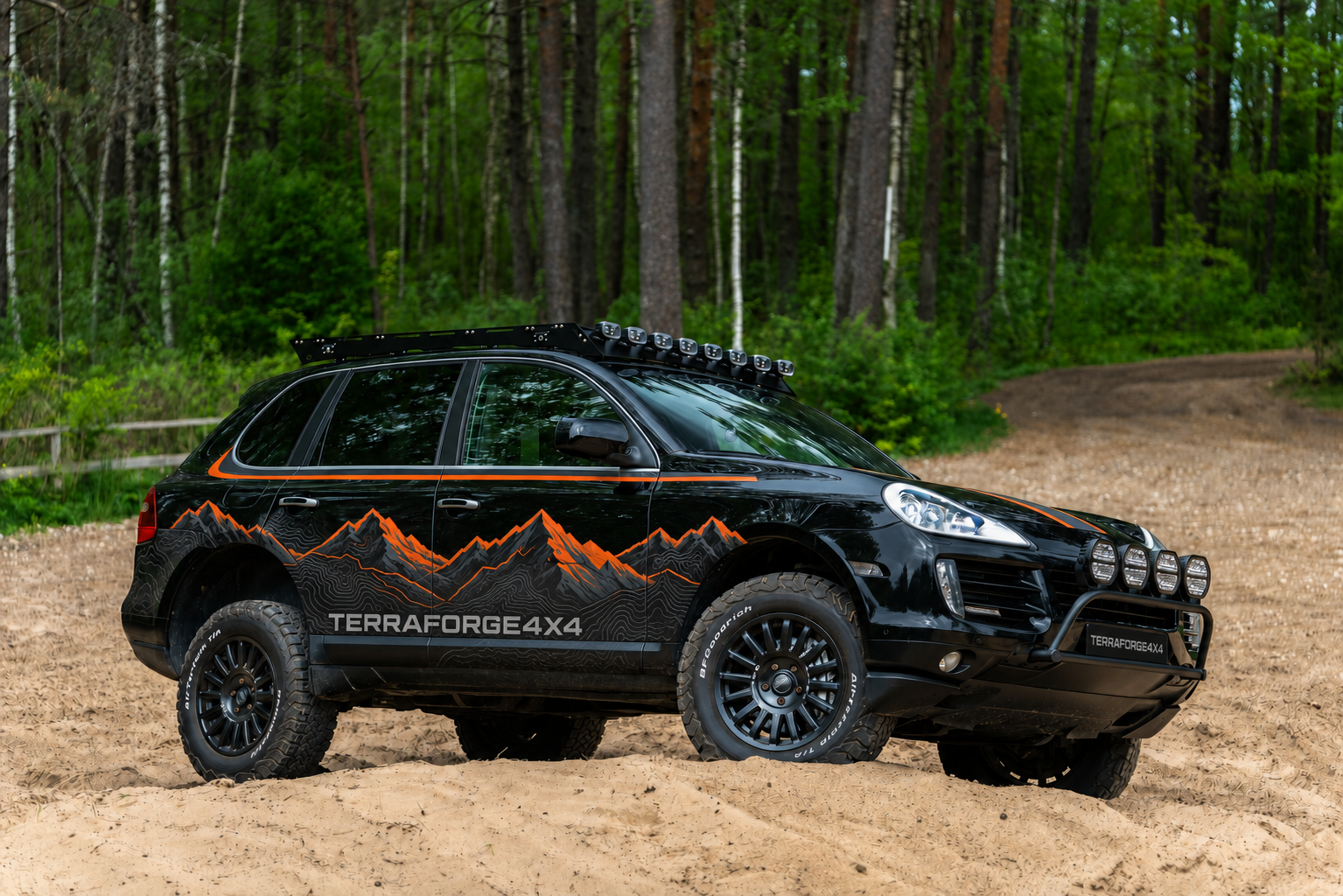
MBD4x4 Porsche Cayenne 957 project — image used with permission.
More clearance is only the beginning
A lift kit changes much more than the distance between the body and the ground. On the Porsche Cayenne 955/957, Volkswagen Touareg 7L and Audi Q7 4L it can affect suspension geometry, driveshaft angles, wheel alignment, tyre clearance and road behaviour. The best setup is therefore designed as a complete system.
The three vehicles belong to the same platform family and share valuable engineering knowledge. However, exact compatibility still depends on model year, engine, brakes, axle weight and whether the vehicle uses air suspension or steel springs. Never assume that a component fits all three simply because the basic platform is related.
What does a lift kit actually change?
A lift can improve approach, breakover and departure clearance, particularly when it is combined with a suitable tyre. It can also create more space in the wheel arches. But body height and true ground clearance are not identical. Raising the body does not automatically raise every low point underneath the vehicle; larger tyres are often needed to increase clearance beneath the differentials and suspension components.
Air suspension versus steel springs
Air-suspension vehicles can already vary their ride height, but a dedicated lift solution changes the mechanical operating position and may require sensor-link, spacer or subframe-related components. The system must still work throughout its complete height range without overstretching air lines, shock absorbers, brake hoses or sensor wiring.
Steel-spring vehicles use a different spring and damper arrangement. Spacer thickness, available droop, shock travel and spring preload must be considered together. Parts intended for one suspension type should never be transferred to the other without explicit manufacturer confirmation.
Why suspension geometry matters
As ride height increases, control arms move away from their original operating angle. Camber, caster and toe can change, while CV joints and driveshafts operate at steeper angles. A moderate road-and-travel build may remain within the adjustment range of standard components; a more extreme setup can require additional correction.
Subframe relocation can help restore part of the original geometry on certain lift designs. Adjustable control arms may also offer correction, but they are not automatically required for every build. The final alignment readings—and the way the vehicle behaves under load—should determine what is needed.
Tyres, wheels and real clearance
Larger tyres can provide the ground-clearance gain many owners are looking for, but the complete wheel-and-tyre package must be checked at full steering lock and through suspension compression. Wheel offset affects inner suspension clearance, outer arch clearance, steering feel and bearing load.
Check clearance at both front wheels through full steering lock.
Inspect brake hoses, air lines and wiring at maximum droop.
Confirm tyre clearance with the vehicle fully loaded.
Recheck wheel-bolt torque after the first drive.
MBD4x4 development example
MBD4x4 uses its own Porsche Cayenne 957 project to test and develop model-specific products. The manufacturer describes this vehicle as having wide fenders, a heavily widened suspension setup and a 4-inch lift kit for air suspension. It is a development vehicle—not a universal installation recipe for every Cayenne, Touareg or Q7.
Before installation, inspect ball joints, control-arm bushes, wheel bearings, dampers and air-suspension components. A lift should not be used to hide existing wear. During fitting, record the original positions of alignment hardware and follow the current manufacturer instructions and torque specifications.
After installation, perform a professional wheel alignment. Then check the setup again after the components have settled and after the first off-road use. Look for contact marks, loose fasteners, stretched lines and unusual tyre wear. Any vibration or change in steering behaviour deserves investigation.
Choosing the right lift
The right lift height depends on the vehicle’s job. For a daily driver and touring build, reliability, alignment range and road manners may matter more than maximum height. A dedicated off-road project can justify more extensive geometry correction, body clearance work and supporting modifications.
TerraForge4x4 will document verified fitment separately for the Cayenne 955/957, Touareg 7L and Audi Q7 4L. That includes suspension type, required supporting parts, tyre combinations and installation lessons from real builds.
Important: Always confirm local inspection, approval and insurance requirements before modifying ride height, track width or tyre size. Safety-critical work should be carried out or checked by a qualified professional.
From Standard SUV to Overland Build: Cayenne, Touareg & Q7
A capable overland build starts with a clear plan—not a pile of parts.
One platform family. Three serious starting points.
The Porsche Cayenne 955/957, Volkswagen Touareg 7L and Audi Q7 4L share important engineering roots. That makes them unusually interesting foundations for touring, overland travel and technical off-road builds. But a good result comes from treating the vehicle as one complete system: suspension, tyres, protection, payload and recovery equipment must work together.
These vehicles combine strong drivetrains, permanent four-wheel drive and long-distance comfort with a platform that can be adapted far beyond standard road use. Shared architecture can also create useful development knowledge across the three models. It does not mean that every component is automatically interchangeable. Model, year, engine, suspension type and local regulations must always be checked before ordering or fitting parts.
1. Define the mission before choosing parts
Start with the journeys the vehicle must handle. A daily-driven Cayenne with occasional forest-road use needs a different setup from a fully loaded Touareg used for remote travel. An Audi Q7 prepared for long motorway stages and campsite access has different priorities again.
Write down the expected payload, tyre size, terrain, trip duration and recovery needs. This determines the right balance between ground clearance, comfort, durability and weight. It also prevents one modification from creating a problem somewhere else.
2. Build the suspension as a system
A suspension lift can improve ground clearance and create room for larger tyres, but lift height alone is not the goal. The useful result is controlled wheel travel, correct geometry and predictable behaviour when the vehicle is loaded.
Air-suspension and steel-spring vehicles require different decisions. Component condition, alignment range, driveshaft and control-arm angles, brake-line clearance and shock travel all deserve attention. After installation, the vehicle should be aligned and all critical fasteners checked again after the first kilometres of use.
3. Match wheels, tyres and offset
Tyres often deliver the biggest practical improvement in traction and resilience. The correct size must still clear the body, suspension and liner through full steering lock and suspension compression. Wheel width and offset influence more than appearance: they affect clearance, scrub radius, bearing load and how much the tyre projects beyond the bodywork.
Always test the complete combination on the specific vehicle. A setup that works on one Cayenne, Touareg or Q7 may need changes on another because of brakes, trim, suspension or production-year differences.
4. Protect the parts that stop a journey
Underbody protection should focus on vulnerable and expensive components: engine, transmission, transfer case, fuel system and exposed cooling parts. Bullbars, rock sliders and recovery points should be selected for their structure and mounting method—not only for their visual impact.
Recovery points must be rated, accessible and connected to a suitable part of the vehicle structure. The same principle applies to towing and winching equipment. If a component has a safety-critical role, professional installation and inspection are worth prioritising.
5. Keep storage low and weight under control
Roof racks, awnings, boxes and tents can transform how the vehicle works at camp, but roof weight raises the centre of gravity. Heavy recovery tools, water and spares are usually better carried as low and as centrally as possible. Check both the vehicle payload and the permitted roof load, including the rack itself.
6. Add lighting, power and recovery last
Auxiliary lighting and electrical accessories should be planned around actual use. Clean cable routing, correct fusing, relays, weather-resistant connections and accessible isolation matter more than the number of lamps. A basic recovery kit, tyre-repair equipment, compressor and safe lifting solution will often add more capability than another cosmetic upgrade.
Development insight from MBD4x4
MBD4x4’s development story began with modifying a vehicle in practice: lift spacers led to larger wheels and the need for a different offset, which in turn created the next engineering questions. That step-by-step approach reflects how a coherent build develops in the real world. Their range spans lift kits, protection, roof systems, lighting, brackets and other off-road equipment.
TerraForge4x4 uses authorised MBD4x4 material as a technical and visual source while adding platform-specific context, installation guidance and real-world build experience. Explore the manufacturer at MBD4x4.
The TerraForge4x4 approach
Our goal is to document what works on the Cayenne 955/957, Touareg 7L and Audi Q7 4L—and to be equally clear about what still needs verification. Fitment notes, installation details and lessons from real use turn individual products into a dependable vehicle.
Before modifying any road vehicle, confirm local approval, inspection and insurance requirements. Use the manufacturer’s current instructions and torque specifications, and have safety-critical work checked by a qualified professional.
Welcome to WordPress. This is your first post. Edit or delete it, then start writing!
Your cookie choices
We use essential cookies to keep the shop working. With your permission, we also use optional cookies to measure visits and understand how customers find our products. You can reject optional cookies and still shop normally. Change or withdraw your choice at any time using Cookie settings.
Functional
Always active
The technical storage or access is strictly necessary for the legitimate purpose of enabling the use of a specific service explicitly requested by the subscriber or user, or for the sole purpose of carrying out the transmission of a communication over an electronic communications network.
Preferences
The technical storage or access is necessary for the legitimate purpose of storing preferences that are not requested by the subscriber or user.
Statistics
The technical storage or access that is used exclusively for statistical purposes.The technical storage or access that is used exclusively for anonymous statistical purposes. Without a subpoena, voluntary compliance on the part of your Internet Service Provider, or additional records from a third party, information stored or retrieved for this purpose alone cannot usually be used to identify you.
Marketing
The technical storage or access is required to create user profiles to send advertising, or to track the user on a website or across several websites for similar marketing purposes.