Air Suspension Lift Guide: Cayenne 955/957, Touareg 7L & Audi Q7 4L
A lift must work with the air system—not against it
The factory air suspension is one of the strongest features of the Cayenne 955/957, Touareg 7L and Audi Q7 4L. A well-designed lift retains height adjustment and ride comfort while creating a higher mechanical baseline. It also introduces checks that do not apply to steel-spring vehicles.
How an air-suspension lift works
Depending on the kit, the vehicle may use strut spacers, revised level-sensor links, subframe components or a combination of these. Sensor links influence what the control system reads; mechanical spacers change the physical position of the body or strut. These are different functions and must match the complete kit design.
The dashboard height selection may remain available, but every factory setting now needs to be checked physically. The highest selectable mode is especially important because hoses, wiring, joints and dampers are closest to their limits there.
Pre-installation inspection
- Scan the suspension control system and resolve existing faults first.
- Check air springs, struts, compressor performance and valve block operation.
- Inspect level sensors and their links for play or damage.
- Inspect control arms, ball joints, wheel bearings and CV boots.
- Record the original ride height at all four corners on level ground.
Geometry and driveline angles
Raising the vehicle changes control-arm and driveshaft angles. A subframe-drop design can restore part of the original relationship between the body, suspension and drivetrain. That can be valuable on a more substantial lift, but installation affects more components and must follow the kit instructions exactly.
Do not decide whether adjustable control arms are necessary by lift height alone. Measure camber, caster and toe after installation. If the factory adjustment range cannot achieve the required values, correction components may be needed.
Calibration and level sensors
Whether electronic ride-height calibration is required depends on how the kit achieves its lift and on the manufacturer’s procedure. Never use calibration as a substitute for correct mechanical installation. After fitting, compare all four corners, verify the displayed height modes and scan for stored suspension faults.
Clearance checks through every mode
Test the vehicle from its lowest selectable setting to its highest. At each position, inspect brake hoses, air lines, sensor wiring, driveshaft boots and damper travel. Turn the steering from lock to lock and check tyre clearance both unloaded and at expected travel weight.
MBD4x4 development reference
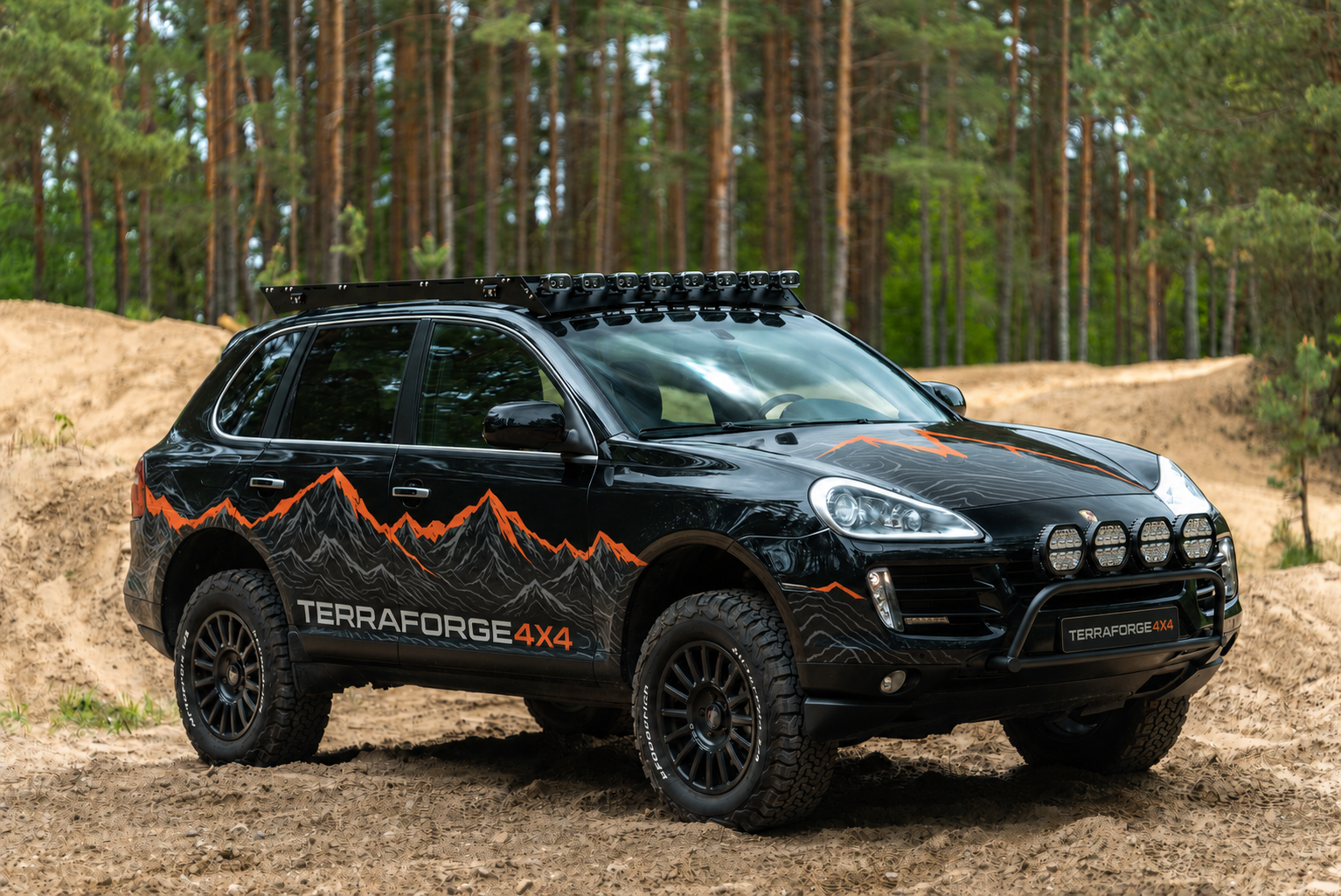
MBD4x4 describes its own Cayenne 957 project as using a 4-inch lift kit for air suspension, together with wide fenders and a heavily widened suspension setup. This is a purpose-built development vehicle, so its specification should not be copied blindly to a standard road car.
View the original vehicle on the MBD4x4 projects page.
After installation
- Perform a professional four-wheel alignment.
- Scan the suspension system and verify every height mode.
- Recheck critical fasteners after the first kilometres.
- Inspect for contact marks after the first off-road test.
- Monitor tyre wear and driveline vibration.
Fitment note: Cayenne 955/957, Touareg 7L and Audi Q7 4L share platform engineering, but suspension hardware, programming and axle loads can differ. Confirm every component for the exact VIN, model year and suspension configuration.