Lift Kits Explained: Cayenne 955/957, Touareg 7L & Audi Q7 4L
More clearance is only the beginning
A lift kit changes much more than the distance between the body and the ground. On the Porsche Cayenne 955/957, Volkswagen Touareg 7L and Audi Q7 4L it can affect suspension geometry, driveshaft angles, wheel alignment, tyre clearance and road behaviour. The best setup is therefore designed as a complete system.
The three vehicles belong to the same platform family and share valuable engineering knowledge. However, exact compatibility still depends on model year, engine, brakes, axle weight and whether the vehicle uses air suspension or steel springs. Never assume that a component fits all three simply because the basic platform is related.
What does a lift kit actually change?
A lift can improve approach, breakover and departure clearance, particularly when it is combined with a suitable tyre. It can also create more space in the wheel arches. But body height and true ground clearance are not identical. Raising the body does not automatically raise every low point underneath the vehicle; larger tyres are often needed to increase clearance beneath the differentials and suspension components.
Air suspension versus steel springs
Air-suspension vehicles can already vary their ride height, but a dedicated lift solution changes the mechanical operating position and may require sensor-link, spacer or subframe-related components. The system must still work throughout its complete height range without overstretching air lines, shock absorbers, brake hoses or sensor wiring.
Steel-spring vehicles use a different spring and damper arrangement. Spacer thickness, available droop, shock travel and spring preload must be considered together. Parts intended for one suspension type should never be transferred to the other without explicit manufacturer confirmation.
Why suspension geometry matters
As ride height increases, control arms move away from their original operating angle. Camber, caster and toe can change, while CV joints and driveshafts operate at steeper angles. A moderate road-and-travel build may remain within the adjustment range of standard components; a more extreme setup can require additional correction.
Subframe relocation can help restore part of the original geometry on certain lift designs. Adjustable control arms may also offer correction, but they are not automatically required for every build. The final alignment readings—and the way the vehicle behaves under load—should determine what is needed.
Tyres, wheels and real clearance
Larger tyres can provide the ground-clearance gain many owners are looking for, but the complete wheel-and-tyre package must be checked at full steering lock and through suspension compression. Wheel offset affects inner suspension clearance, outer arch clearance, steering feel and bearing load.
- Check clearance at both front wheels through full steering lock.
- Inspect brake hoses, air lines and wiring at maximum droop.
- Confirm tyre clearance with the vehicle fully loaded.
- Recheck wheel-bolt torque after the first drive.
MBD4x4 development example
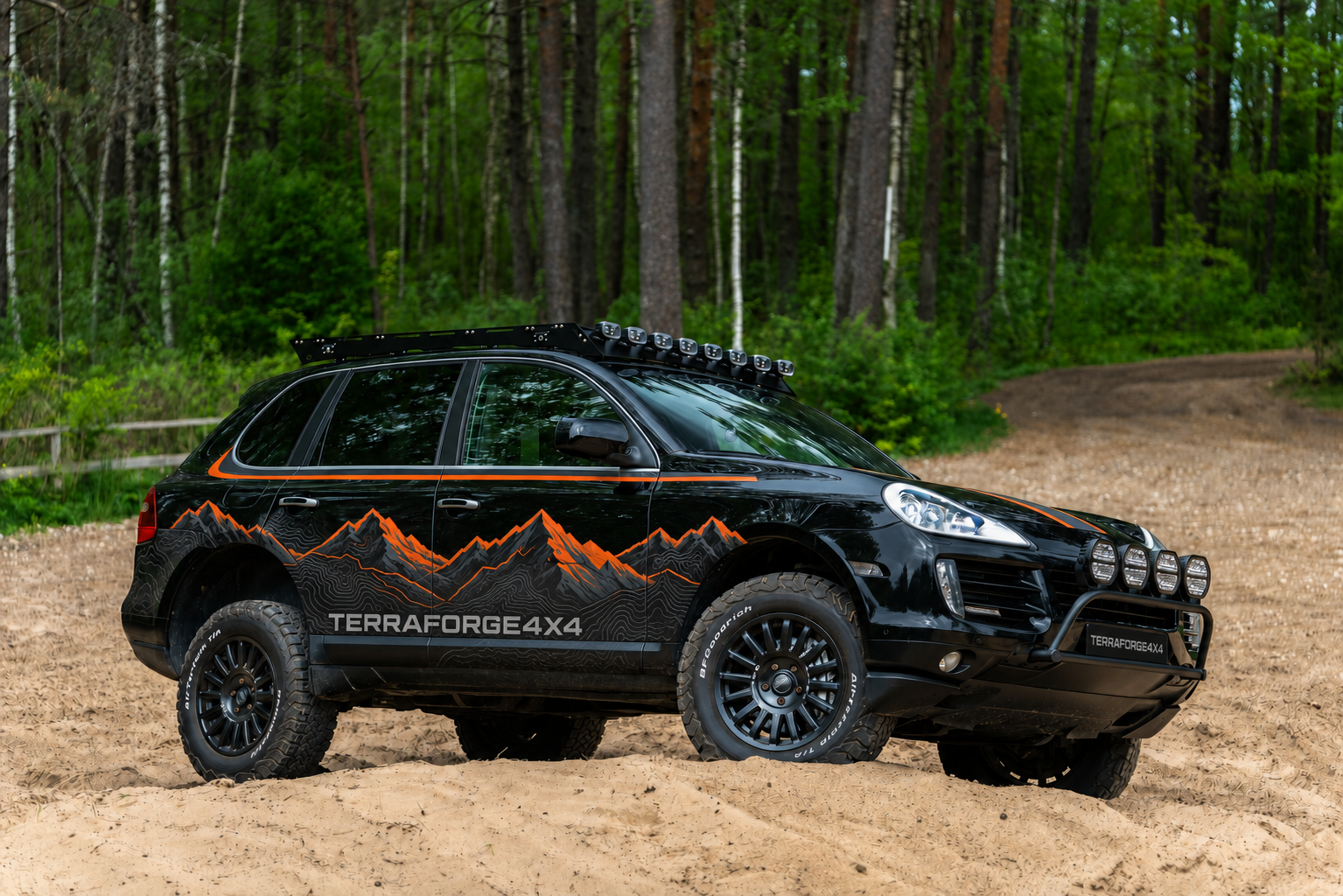
MBD4x4 uses its own Porsche Cayenne 957 project to test and develop model-specific products. The manufacturer describes this vehicle as having wide fenders, a heavily widened suspension setup and a 4-inch lift kit for air suspension. It is a development vehicle—not a universal installation recipe for every Cayenne, Touareg or Q7.
See the original build on the official MBD4x4 projects page.
Installation and checks
Before installation, inspect ball joints, control-arm bushes, wheel bearings, dampers and air-suspension components. A lift should not be used to hide existing wear. During fitting, record the original positions of alignment hardware and follow the current manufacturer instructions and torque specifications.
After installation, perform a professional wheel alignment. Then check the setup again after the components have settled and after the first off-road use. Look for contact marks, loose fasteners, stretched lines and unusual tyre wear. Any vibration or change in steering behaviour deserves investigation.
Choosing the right lift
The right lift height depends on the vehicle’s job. For a daily driver and touring build, reliability, alignment range and road manners may matter more than maximum height. A dedicated off-road project can justify more extensive geometry correction, body clearance work and supporting modifications.
TerraForge4x4 will document verified fitment separately for the Cayenne 955/957, Touareg 7L and Audi Q7 4L. That includes suspension type, required supporting parts, tyre combinations and installation lessons from real builds.
Important: Always confirm local inspection, approval and insurance requirements before modifying ride height, track width or tyre size. Safety-critical work should be carried out or checked by a qualified professional.
Choose your suspension type
Air suspension and steel springs require different parts, installation procedures and checks. Continue with the guide that matches your vehicle.